
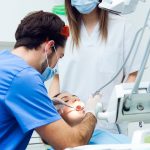

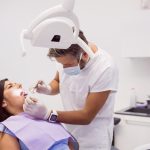







A missing tooth changes how you chew, speak and smile. Fixing it with an implant is a long-term decision, yet many patients in Surat spend weeks comparing clinics without knowing what to compare. Every clinic says it is good. Very few explain how to judge that. This guide gives you a clear way to shortlist the best doctors for dental implantation in Surat: the qualifications to look for, the questions to ask, and the warning signs to avoid. Use it with any clinic, including ours.
Why Choosing the Right Implant Doctor Matters
An implant is a small titanium post placed in the jawbone. Over time, the bone bonds to it, a process called osseointegration. An abutment is then fixed on top, and a crown completes the tooth.
The steps sound simple. The results depend heavily on the person doing them.
- Surgical judgement. The implant must sit at the right angle and depth, clear of nerves and the sinus. This is planning and hand skill, not equipment.
- Case selection. A careful doctor will tell you when an implant is not the right option yet, for example when gum disease or uncontrolled sugar needs attention first.
- Long-term care. Implants need follow-up. A clinic that disappears after the crown is fitted leaves you with no one to check bite, gums or bone.
A cheaper or faster option is not a saving if it has to be redone. The doctor you choose shapes how well the implant works years from now.
How to Identify the Best Doctors for Dental Implantation in Surat
“Best” is not a title a clinic can give itself. It is something you check. Use this list when you visit or call any clinic.
- Relevant qualification. Look for an MDS in Oral & Maxillofacial Surgery (surgical training in the jaw and face) or Prosthodontics (specialist training in replacing teeth). Ask who actually places the implant, not just who owns the clinic.
- Implant-focused experience. Ask roughly how many implant cases the doctor handles and what kinds: single tooth, full mouth, low bone.
- CBCT-based planning. A CBCT scan is a 3D X-ray that shows bone height, width and nerve position. Planning from a flat X-ray alone gives less information.
- Implant brand transparency. A good clinic names the implant system it uses and tells you why. Vague answers are a warning sign.
- Sterilisation standards. Ask how instruments are sterilised. You are allowed to.
- Written treatment plan. You should leave with the steps, the timeline and the cost in writing.
- Follow-up care. Ask what happens after the crown is placed and how often you will be reviewed.
- No pressure selling. If you are pushed to pay on the first visit, or promised results that sound too good, walk away.
A doctor who answers all eight openly is worth shortlisting.
Dental Implant Treatment in Surat: What the Process Looks Like
Knowing the steps helps you spot a rushed plan. Most dental implant treatment in Surat follows this order:
- Consultation. The doctor checks your teeth, gums, bite and medical history, including diabetes, blood pressure and medicines.
- CBCT scan. The 3D scan shows how much bone is available and where the nerves and sinus sit.
- Planning. The doctor chooses implant size, position and whether extra bone support is needed.
- Implant placement. Done under local anaesthesia. Most patients describe pressure rather than pain, though some soreness afterwards is normal.
- Healing. In the conventional approach, the bone is given time to bond with the implant before the final tooth is fixed. This often takes a few months.
- Abutment and crown. The final tooth is made and fitted to your bite.
Immediate loading as an option. In suitable cases, a fixed tooth or set of teeth can be attached within about two days of placement. This depends on bone quality, implant stability and your overall health. It is a different protocol with its own indications, not an upgrade every patient should expect. Your doctor decides after evaluation.
Who Is a Good Candidate?
Many people assume they cannot have implants. Often the real answer is “it depends, let’s check.”
- Low bone. Bone shrinks after tooth loss. Options include bone grafting, a sinus lift for the upper back jaw, or specialised implants designed for limited bone. Not every case suits every technique.
- Diabetes. Implants are possible for many diabetic patients when blood sugar is well controlled. Healing can be slower, so planning and follow-up matter more.
- Multiple or all teeth missing. Full-mouth options use a set number of implants to support a fixed bridge, which some denture wearers prefer.
- Smokers and people with gum disease. These raise the risk of problems and usually need attention before treatment.
Suitability is always decided after a clinical examination and scan. No one can confirm it over the phone.
Why Patients Consider Simpladent Clinics Surat
If you are searching for a dental implant clinic near me in Vesu or south-west Surat, here is what we offer, stated plainly.
Our implant work is led by Dr. Aroon K. Bengani, MDS in Oral & Maxillofacial Surgery. His profile lists him as a Gold Medalist, and he trained in immediate dental implants in Munich, Germany. As a maxillofacial surgeon, his training covers the jaw anatomy that matters most in difficult implant cases.
Our implant services include:
- Immediate-loading implants, with fixed teeth in about two days for suitable cases
- Implants in low-bone cases, using bone grafting or specialised implants where appropriate
- Implants for diabetic patients, with a tailored plan
- Full-mouth implants
We also provide general dentistry, root canal treatment and emergency dental care, so routine needs are handled in the same place.
The clinic is at Shop 703, 7th floor, Orbit 2 Pramukh, opposite Satva Hospital, Vesu. For patients who need a dental implant clinic near me with easy landmark directions, the hospital opposite makes us simple to find.
We would rather you compare us properly than choose us blindly. Bring the checklist above to your consultation.
Questions to Ask Any Implantologist Before You Decide
Write these down and take them to every clinic you visit:
- Who will place my implant, and what is their qualification?
- Will you take a CBCT scan before planning?
- Which implant brand do you use, and why?
- Am I suitable for immediate loading, or is the conventional approach better for me?
- Do I need bone grafting or a sinus lift?
- What could make my implant fail, and how do we reduce that risk?
- What is included in the quoted cost, and what is extra?
- What follow-up visits are included after the crown?
The best implantologist doctors in Surat will welcome these questions. Defensive or vague answers tell you something too.
Dental Implant Cost in Surat: What Affects It
We do not publish a single price, because an honest quote needs an examination. These are the factors that change the cost:
- Number of implants: one tooth, several, or a full arch
- Protocol: immediate loading or conventional, staged treatment
- Bone support: whether grafting or a sinus lift is needed
- Implant system: brands differ in cost and design
- Crown material: such as metal-ceramic or zirconia
- Scans and preparatory work: CBCT, extractions or gum treatment before placement
When comparing quotes across clinics, compare the full plan, not just the headline number. A low figure that excludes the crown or the scan is not a lower price.
FAQs
See the FAQ block below.
Conclusion
Finding the best doctors for dental implantation in Surat comes down to checking qualification, planning, honesty and follow-up rather than trusting labels. Use the checklist, ask the hard questions, and choose the doctor whose answers you understand. If you would like an assessment with Dr. Bengani, call or WhatsApp +91-9484823040, or book a visit
FAQ
Q1. How do I choose the best implant doctor in Surat?
Check the doctor’s qualification (MDS in Oral & Maxillofacial Surgery or Prosthodontics), ask whether a CBCT scan is used for planning, and request a written treatment plan. Ask which implant brand is used and what follow-up is included. Avoid clinics that pressure you to pay on the first visit.
Q2. Can I get fixed teeth in two days?
For suitable cases, yes. Immediate loading allows a fixed tooth or set of teeth to be attached within about two days of implant placement. It depends on bone quality, implant stability and general health. Your doctor decides after a clinical examination and 3D scan. It is not right for every patient.
Q3. I was told I have no bone. Can I still get implants?
Often, yes. Low bone can sometimes be managed with bone grafting, a sinus lift, or specialised implants designed for limited bone. Whether these suit you depends on your scan and medical history. A CBCT scan and consultation are needed before any doctor can give you a reliable answer.
Q4. Are dental implants safe for diabetic patients?
Implants are possible for many diabetic patients when blood sugar is well controlled. Healing may be slower, so the doctor plans carefully and may schedule closer follow-up. Share your recent sugar reports and medicines at the consultation. Uncontrolled diabetes usually needs to be managed before implant treatment begins.
Q5. Do dental implants hurt?
Implant placement is done under local anaesthesia, so most patients feel pressure rather than pain during the procedure. Some swelling or soreness for a few days afterwards is normal and is usually managed with prescribed medicines. Recovery varies by person and by the number of implants placed.


